Future Flying LLC
Veteran-Owned Aircraft Leasing
Founded by Marine HMX-1 Aviators
KHWY  ·  Warrenton, VA

Fixed-Wing Time Building
for Military Aviators.

Build fixed-wing PIC hours toward your ATP or rebuild currency at Warrenton-Fauquier Airport, within easy reach of Quantico, Fort Belvoir, and the Pentagon. Dedicated aircraft. Flexible scheduling. No flight-school overhead.

50
Hour Blocks
$135*
Per Tach Hour
180
HP Cherokee
Part 91 Dry Lease Built Around Military Schedules IFR Glass Panel

* Dry rate — fuel not included. Pilot provides own fuel.

Scroll
We Do Not Provide Initial Instruction

Future Flying LLC is not a flight school. We lease a well-maintained aircraft to already-certificated pilots under a Part 91 dry lease. You already know how to fly — we provide a great airplane to do it in.

Built for Pilots
Who Mean Business

Future Flying LLC was founded by Marine aviators who understand what it takes to build a professional aviation career. We created a direct, no-nonsense model: give serious, credentialed pilots access to a dedicated, well-maintained aircraft — without the overhead of a flight school, without sharing a rental pool, and without the bureaucracy of a flying club.

Whether you're a helicopter pilot time building toward your ATP, a military aviator maintaining currency, or a certificated pilot who needs reliable dedicated access — this is where professional aviators come to advance their careers.

We serve active-duty, Guard, Reserve, and veteran aviators across Northern Virginia and Washington, DC, including Quantico, Fort Belvoir, Joint Base Anacostia-Bolling, and the Pentagon.

Future Flying LLC
Future Flying LLC
Established 2025  ·  Warrenton, Virginia
KHWY  ·  Warrenton-Fauquier Airport
01
Dedicated Aircraft
One aircraft. Known configuration. Consistent performance. Shared by a small, vetted group of pilots — not a rental pool where you don't know who flew it last or in what condition it was returned.
02
Vetted Pilots Only
Every pilot is screened, certificated, and checked out by one of our designated CFIs. This is a private arrangement between aviators — not open to the general public.
03
Transparent Pricing
$135 per tach hour on a dry lease basis. 50-hour prepaid blocks. Every charge is spelled out in the lease. No upsells, no instruction you didn't ask for.
04
Military-Schedule Friendly
Military schedules are unpredictable — duty days, field ops, TAD, and staff surges. Our scheduling is flexible and built around that reality, so you fly when your calendar allows.
02 — Our Story
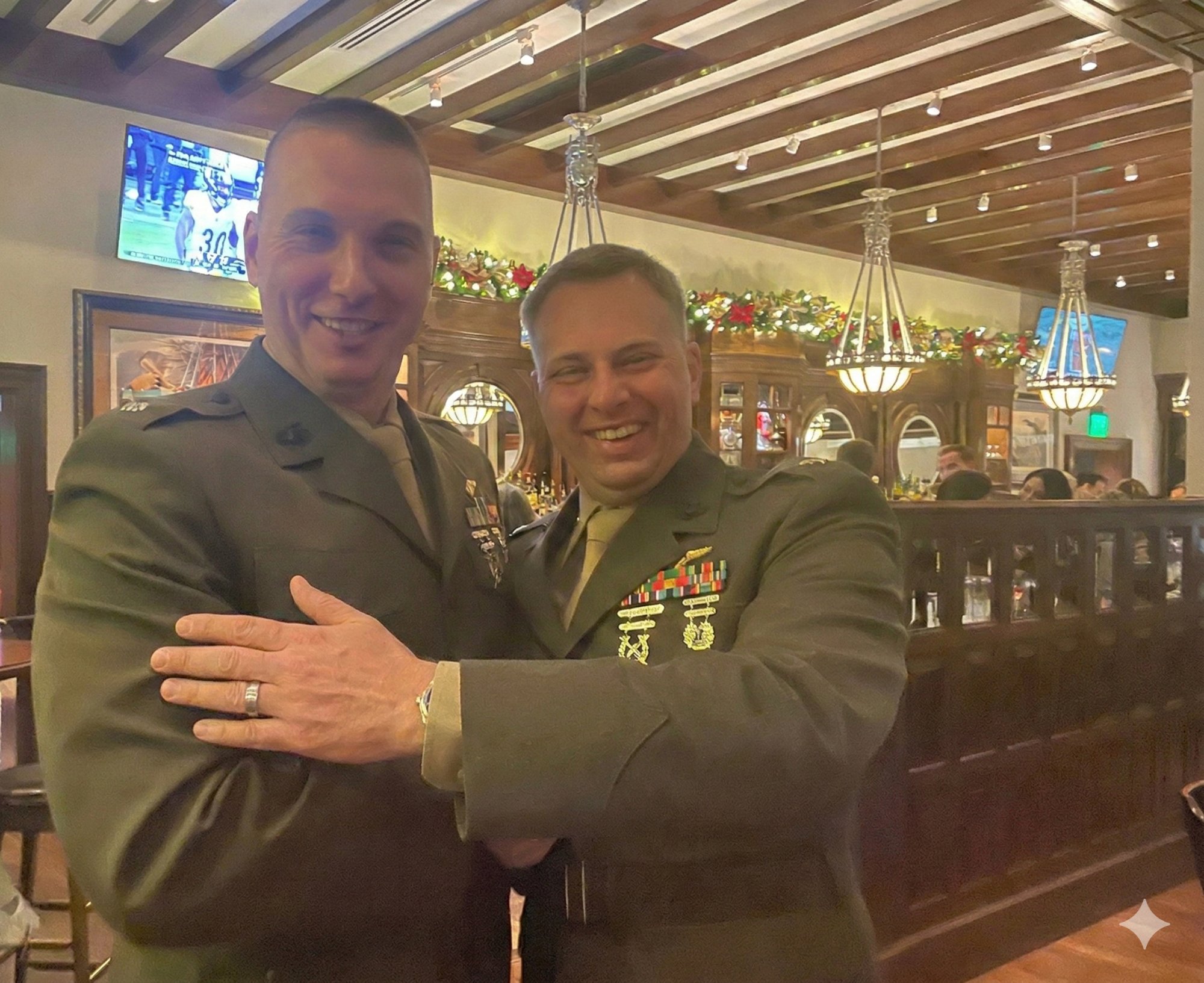
Two Marines walked into a bar…
…and after a few drinks, a community was born.
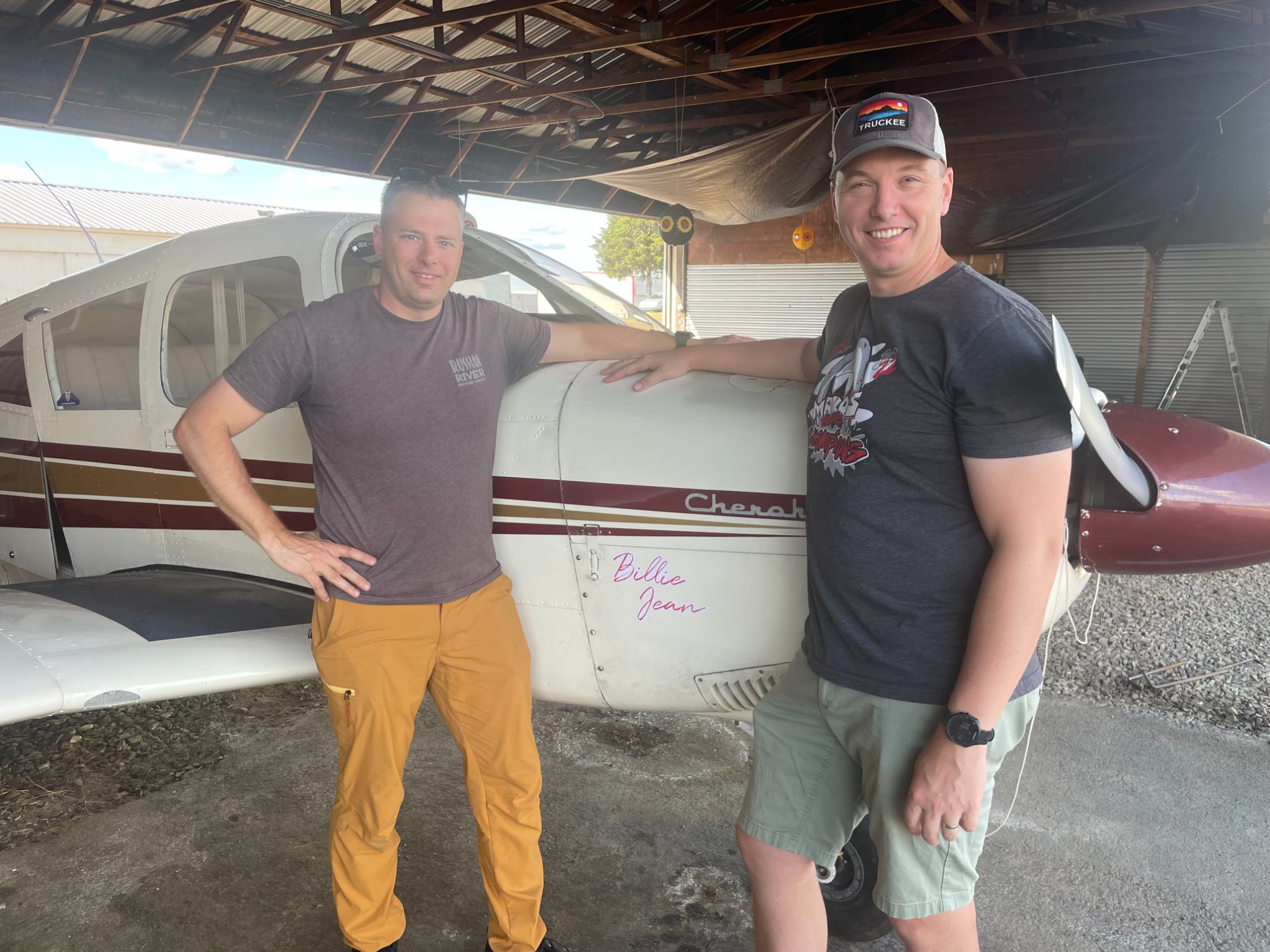
RAMROD and Sly — the night Future Flying was born
RAMROD  ·  Left The night it all started Sly  ·  Right

Grant and Jason were both HMX pilots — the kind of assignment where you've already had to prove yourself twice over. They were nearing the end of their aviation careers in the Marine Corps, and the conversation, like most good ones, turned to what came next.

The problem was familiar to anyone who'd worn the uniform: the programs that existed weren't designed for pilots like them. Schedules were unpredictable. Blocks of time were hard to find. Building fixed-wing hours through conventional channels meant fighting a system that was never built with their transition in mind.

So they decided to do what Marines do. They solved the problem themselves.

They weren't certain where it would lead. What they knew was that at the very least, it would give them a way to keep flying together — and after careers spent in the cockpit, that wasn't a small thing.

The first few flights changed everything. It became immediately, undeniably clear that other pilots needed this too. What began as a solution for two became a platform for many. Future Flying LLC was built to solve a problem — and became something neither of them expected: a community.

Sly
Jason  ·  Co-Founder & Owner
AH-1W Super Cobra  ·  HMX-1
A Cobra pilot with the reflexes, discipline, and instincts that platform demands. Equal parts tactician and aviator — the kind of co-founder who doesn't just talk about solving problems, he executes.
RAMROD
Grant  ·  Co-Founder & Owner
CH-53E Super Stallion  ·  HMX-1
Nearly two decades in Marine Corps aviation, including time as a presidential support pilot with HMX-1. The kind of aviator who has operated in the most demanding airspace in the world and made it look routine.
The day Billie Jean got her name
The Day She Got Her Name
Billie Jean.

Every great aircraft deserves a name. This was the moment N8327W became something more — a partner, a platform, and the beginning of something neither of them fully expected.

Still flying together.

The bar conversation that started all of this wasn't about building a business. It was about not being done flying — and not wanting to figure that out alone. If that sounds familiar, you're in the right place.

You've Always Had
Someone on Your Wing.

Military aviation is a team sport. Whether you're in a cockpit, a Ready Room, or on a flight deck — you've operated as part of something larger. Your mission had a crew, a wingman, a team. That's how you were trained. That's how you flew.

Now you're building hours toward your ATP — and for the first time, the mission feels different. There's no wingman on the flight schedule. No crew brief. No one else in the flight planning room at 0600. The hours you need to log are your responsibility, on your timeline, with your own initiative driving the effort.

For many transitioning military aviators, this isn't just a logistical challenge — it's a psychological one. The crewed environment isn't just about safety or procedure. It's about shared purpose, accountability, and the social framework of a mission. When that structure disappears, so can the momentum.

We understand that. And we built Future Flying with that reality in mind.

You Don't Have to Fly Alone
Want a safety pilot, a second set of eyes, or simply someone to share the cockpit with? Our pilots regularly pair up and fly together, and you can also bring your own qualified safety pilot. Guests sign our Guest Pilot Agreement and carry their own renter's insurance. The mission doesn't have to be a solo flight.
Split the Cost, Build the Hours
Flying with another qualified pilot isn't just good company — it's financially smart. When two Future Flying pilots fly together, tach time and fuel are split 50/50. Each pilot logs time as 14 CFR 61.51 allows, and you build experience at a fraction of the solo out-of-pocket cost.
A Community of Professionals
Future Flying's pilots are a vetted group of serious aviators — military, veterans, and credentialed professionals who understand the mission. Flying partnerships and friendships develop naturally when you're surrounded by people who get it.
Your Mission. Your Timeline.
When you're ready to go solo, the aircraft is ready too. No pressure, no judgment. This is your career advancement on your terms — we're here to provide the platform and the support.
Problems We Were
Built to Solve.

Senior military aviators arrive at the doorstep of a civilian aviation career with credentials most people spend a decade chasing — and still face a specific set of obstacles that civilian pilots never encounter. We know these hurdles because we've lived them. Future Flying was designed specifically to clear them.

01
The 250-Hour Problem
You Have 1,500+ Hours.
The Wrong Kind.
Most civilian pilots spend years working toward the 1,500 total hours required for an ATP. You cleared that milestone long ago — and depending on where your career has taken you, you may have hundreds or thousands of hours beyond it. But raw experience and total time aren't what's standing between you and that airline interview. That number is 250 hours of fixed-wing Pilot-in-Command time — and it's a requirement the military was never designed to fill.

Marine Corps and Navy pilots typically log 85–90 hours in primary fixed-wing training — but only about 8 of those hours qualify as fixed-wing PIC. The rest doesn't count. You didn't fly less than a civilian student. You flew a completely different mission. And now you have to bridge a specific gap that no military training program was built to address.

That's exactly what Future Flying is for. The 250 hours looks daunting from the outside. It isn't — with the right platform and the right model.
Future Flying fills the gap
02
The Timing Problem
Don't Wait Until Terminal Leave
to Figure It Out.
The second hurdle isn't logistical — it's behavioral. Most transitioning military pilots don't start thinking about their fixed-wing PIC hours until they're already in the middle of separating. By then, the calendar is working against you.

The final months before leaving active service are among the most demanding of your career: TAP classes, household goods, final evaluations, command transitions, and the weight of one of the biggest personal decisions you'll ever make. Trying to squeeze in 50, 100, or 200 flight hours on top of all of that is a recipe for frustration — and an expensive one.

Start early. Fly a little at a time. When you make that final drive off of base, your logbook will be ready — and so will your financial footing. Future Flying's 50-hour block model is built for exactly this kind of long-game approach.
Start building now, not later
03
The Currency Problem
A Non-Flying Billet
Doesn't Ground You.
Military careers don't always end in the cockpit. Many senior officers spend their final two or three years in a staff position, an acquisition billet, a joint assignment, or any number of roles that keep them on the ground. You still have wings on your chest — but the hours have stopped accumulating.

Airlines and civilian employers increasingly want to see recent flight experience, not just total hours. A logbook that goes cold in your last years of service can raise questions that your total time alone can't answer.

Future Flying keeps you current. Whether you're in a non-flying billet now, or anticipate one before you separate — consistent, documented fixed-wing time in a modern, IFR-capable aircraft is exactly the kind of recency that matters to hiring boards.
Stay current through every billet

The bottom line: You've already done the hard part of a military aviation career. Don't let a solvable, specific gap in your fixed-wing flight hours be the thing that stands between you and the civilian career you've earned. Future Flying exists to close that gap — efficiently, affordably, and on your schedule.

Keep Your Options Open.
All of Them.

Military service is many things. One of the things it is not — is full of choices. You go where the orders say. You fly what the squadron needs. You stay as long as the mission requires. For most of a military career, the concept of options is largely theoretical.

That changes when you transition. Suddenly, the entire civilian aviation landscape is in front of you — airlines, corporate and business aviation, instruction, the emerging eVTOL industry, government contract flying, and career paths that didn't exist five years ago. The problem is that many of those paths require fixed-wing time that you may not have yet.

Time doesn't stand still. Every month you wait is a month your logbook doesn't grow. Every year you delay is a year the civilian pilots you'll be competing against are building hours, building type ratings, and building relationships with hiring managers. The hill you are climbing doesn't get easier if you wait.

The good news: you don't have to know exactly what you want yet. You just have to start. The fixed-wing hours you build at Future Flying are valid, loggable, and professionally documented regardless of which path you ultimately choose. Build the hours now. Make the career decision later — from a position of strength, not urgency.

PATH 01
Commercial Airlines
The ATP requires 250 hours of fixed-wing PIC. Regional carriers are hiring aggressively. Your military background is a significant advantage — once the logbook reflects it.
PATH 02
Corporate & Business Aviation
Corporate flight departments and business aviation operators value professionalism, precision, and composure under pressure — traits you've spent a career developing. Fixed-wing currency makes you competitive immediately.
PATH 03
eVTOL & Emerging Aviation
Companies like Archer, Joby, and Beta Technologies will be actively searching for experienced aviators as their platforms mature. Rotary-wing backgrounds are highly valued — and fixed-wing currency signals versatility and seriousness to hiring teams.
PATH 04
Government & Contract Flying
Federal agencies, DoD contractors, and special mission operators seek pilots with active clearances, diverse flight experience, and recent currency. Fixed-wing time broadens your eligibility significantly.
PATH 05
I'm Not Sure Yet
That's a perfectly valid position — and the best reason of all to start now. Hours in your logbook open doors. A blank logbook closes them. You can figure out which door to walk through later.
Start Now. Decide Later.

100 hours of fixed-wing PIC time built during the last two years of your military career is worth far more than the same 100 hours built in a rushed, expensive push after you've already separated. Your financial footing, your mental bandwidth, and your logbook will all be in a better position if you start the mission before that final drive off of base.

How It Works

No long-term contracts, no membership fees, no bureaucracy. Get screened, get qualified, and fly.

01
Submit an Inquiry
Fill out the contact form with your certificates, ratings, and what you're working toward. We'll reach out within 48 hours for a brief intake conversation.
02
Screening, Lease & Block
We verify your certificates, logbook, and renter's insurance. You sign our Non-Exclusive Dry Lease Agreement and purchase a 50-hour prepaid block at $135/tach hour (dry lease).
03
CFI Checkout & Authorization
Fly with one of our designated CFIs for a make-and-model checkout and logbook endorsement. Once your logbook totals are verified, you receive written solo authorization.
04
Fly on Your Schedule
Schedule through our booking system. The aircraft is yours during your reserved slot. Fly your profile, build your hours — solo or with a fellow qualified pilot. Hours are tracked transparently against your block.

The 50-Hour Block Model — Dry Lease

Flight time is billed at $135 per tach hour on a dry lease basis — meaning you provide your own fuel. Blocks are 50 hours, paid in advance. This structure gives you dedicated, committed access to the aircraft and gives us the certainty to keep it maintained to the highest standard. Scheduling is flexible and built around military life. Contact us to discuss your specific situation.

$135
Per Tach Hour
Dry Lease

The Ready Room.

Where pilots gather, brief missions, and look out for each other. If you recognize a callsign on this roster, you already know what it means to be in this room. If you don't — you're about to meet some of the finest aviators who've ever strapped in.

Founders & Owners
Owner · Founder
RAMROD
CH-53E Super Stallion
Owner
Owner · Founder
Sly
AH-1W Super Cobra
Owner
Current Pilots
Pilot
BITLiD
UH-1Y Venom
Pilot
Sloth
AH-1Z Viper
Pilot
Kujo
CH-53E Super Stallion
Pilot
Kiwi
CH-46E Sea Knight
UH-1Y Venom
Pilot
Cougar
CH-53E Super Stallion
Pilot
Merman
AH-1Z Viper
Pilot
Slayer
CH-53E Super Stallion
Alumni
Alumni Pilot
Dallas
UH-1Y Venom
Alumni
Alumni status is earned after completing two 50-hour blocks. Alumni pilots may then purchase time in 10-hour increments — a recognition of their established proficiency and commitment to the program.

Interested in joining our Ready Room? If you're a certificated military aviator looking to build fixed-wing time and you think you'd fit in with this group — reach out. The right callsign opens a lot of doors.
Meet the airplane

N8327W

Billie Jean

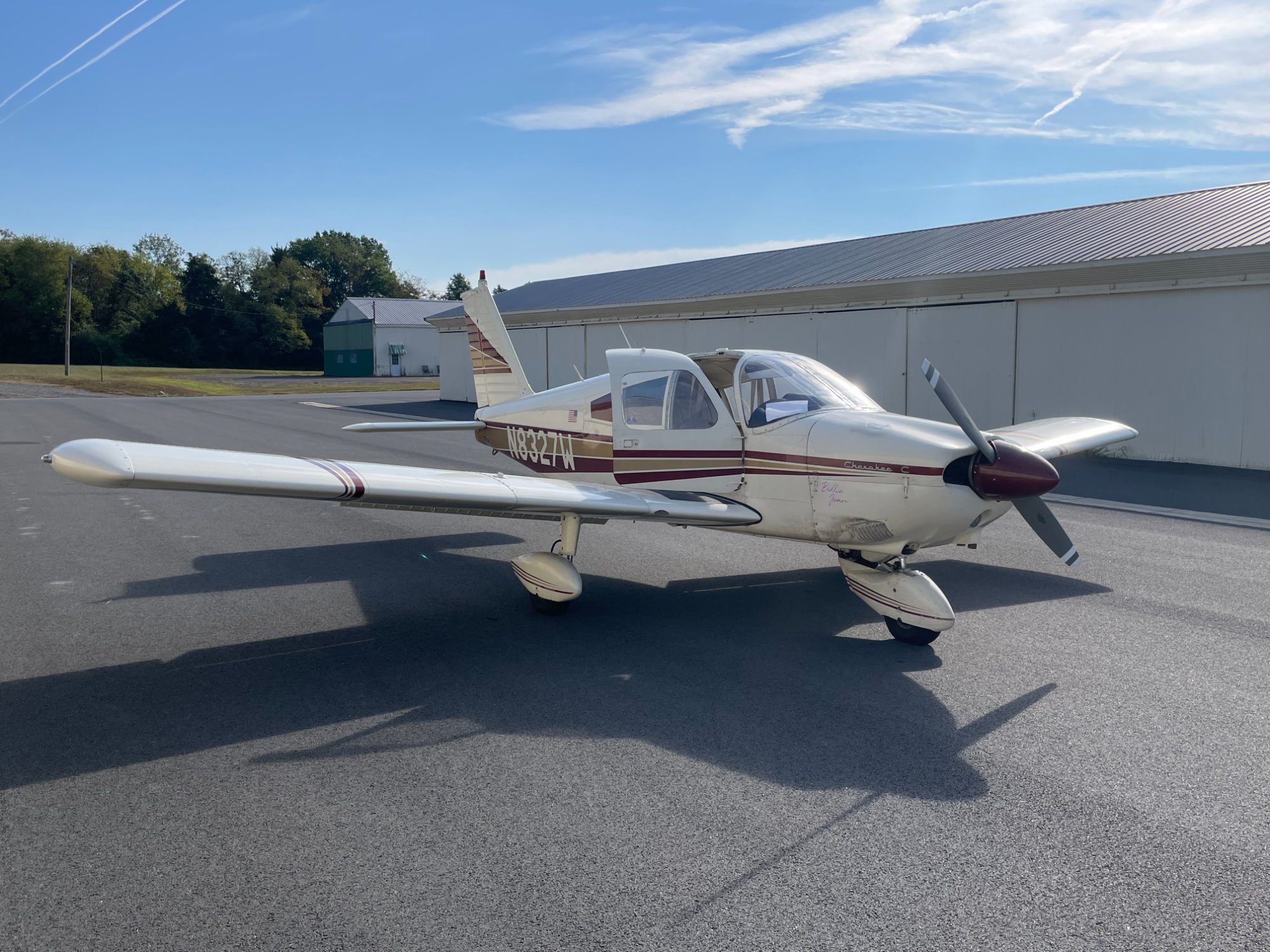
She's a 1965 Cherokee 180 with a classic soul and a modern instrument panel. Maintained to Part 91 standards, hangared at KHWY, and ready to fly. Once you strap in, she stops being a tail number.

N8327W Billie Jean — Piper Cherokee 180 at KHWY
N8327W
Piper PA-28-180 · 1965
Billie Jean · Warrenton-Fauquier Airport (KHWY) · Warrenton, Virginia
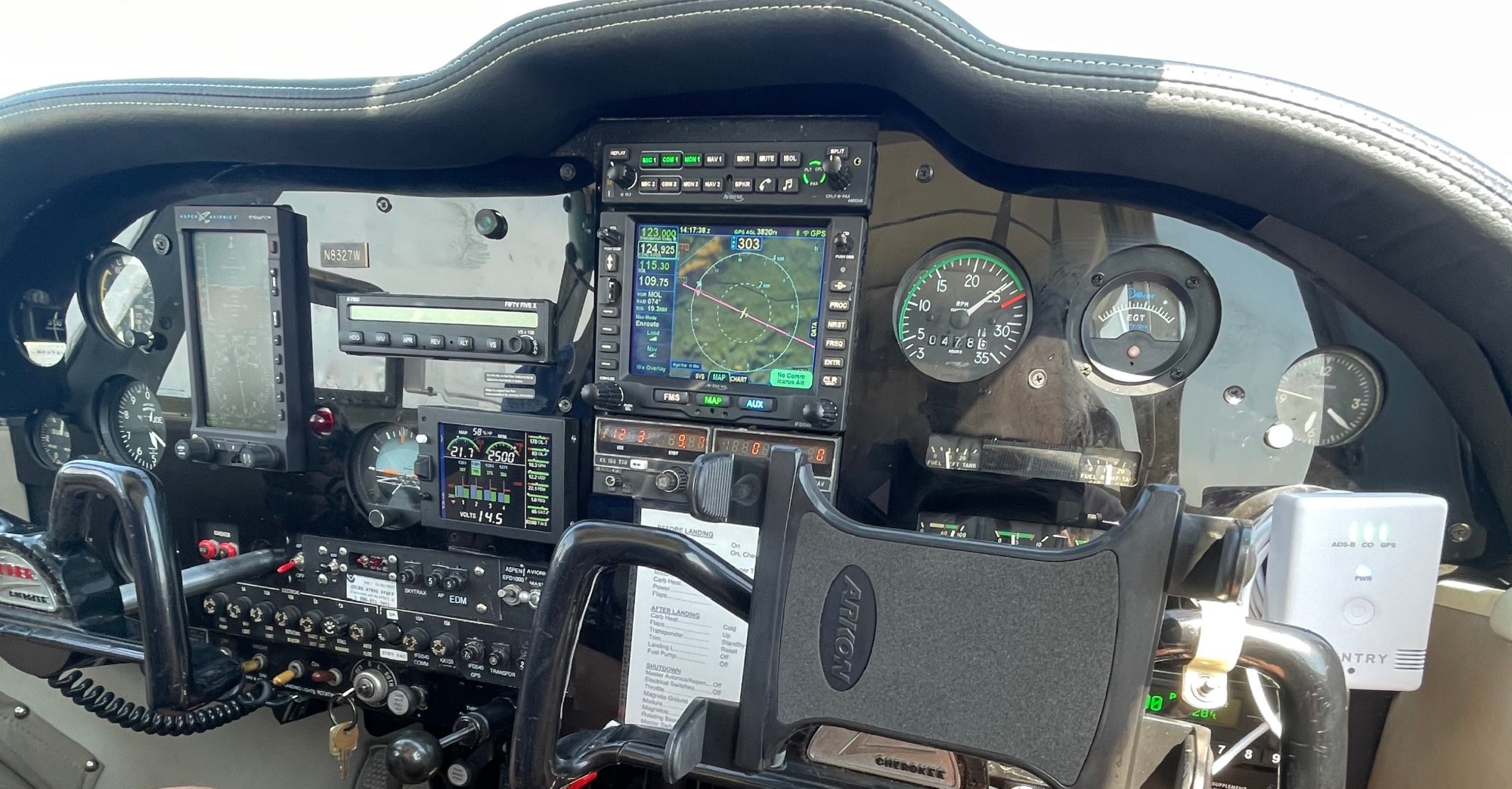
N8327W instrument panel — Aspen EFD1000, Avidyne IFD540
Upgraded IFR avionics suite · Glass PFD · Touchscreen FMS · Two-axis autopilot

Billie Jean isn't a rental pool aircraft. She's a dedicated, known-quantity machine with a consistent configuration, a clean maintenance record, and avionics that would feel at home in a glass-cockpit trainer. What's under the cowling is classic. What's on the panel is anything but.

RegistrationN8327W
NameBillie Jean
ManufacturerPiper Aircraft Corporation
ModelPA-28-180 Cherokee
Year1965
EngineLycoming O-360 · 180 HP
ConfigurationLow-wing · Fixed gear · 4 seats
Base of OperationsKHWY · Warrenton, Virginia
StorageHangared
Lease TypeDry Lease · $135/tach hour
Upgraded Avionics Suite
  • Aspen EFD1000 — Electronic Primary Flight Display (glass PFD)
  • Avidyne IFD540 — Touchscreen FMS / GPS / COM/NAV
  • S-TEC 55X — Two-Axis Digital Autopilot

Who We
Work With

Future Flying is designed for pilots who already know how to fly and need professional-grade access to fixed-wing time. We are not a pathway to learning — we're a resource for advancing.

  • ✓ Hold a valid FAA Pilot Certificate (Private or higher) with an Airplane Single-Engine Land rating
  • ✓ Current FAA medical or BasicMed, and a current flight review
  • ✓ 200 total logged flight hours and 10 hours in PA-28 series aircraft (time in type can be built with our designated CFIs)
  • ✓ Make-and-model checkout with one of our designated CFIs before solo operations
  • ✓ FAA DC SFRA Special Awareness Training certificate
  • ✓ Your own non-owned aircraft (renter's) insurance
  • ✓ Helicopter pilots building fixed-wing hours toward ATP-R or ATP
  • ✓ Military aviators seeking fixed-wing currency
Not sure if you qualify? Reach out anyway. If you hold a valid certificate and have a legitimate professional reason to build fixed-wing time, we'll have a direct, no-pressure conversation about fit.
A Clear Statement on What We Are Not

Future Flying LLC is not a flight school. We hold no Part 141 or Part 61 school certificate. We do not provide ground school, structured flight instruction, training syllabi, or FAA-approved courses of training.

We are a veteran-owned aircraft leasing company. We lease our aircraft to certificated pilots under a Part 91 non-exclusive dry lease. We do not provide pilots or crew, charter or air-taxi flights, or carriage of passengers or cargo for hire. If you need primary flight training, we respect that need — but that's not what we do, and we don't want there to be any ambiguity about it.

Dry Lease — What It Means

Under our Part 91 dry lease, the pilot who books the reservation holds operational control of the aircraft for that reservation, and only an authorized Future Flying pilot acts as pilot-in-command. You fly under your own certificate, you provide the fuel, and you may not carry passengers or property for compensation or hire. Future Flying LLC provides an airworthy aircraft maintained to Part 91 standards. Our insurance protects the LLC; renters carry their own renter's insurance.

Common Questions

Where can I build fixed-wing hours near Quantico or DC?

At Warrenton-Fauquier Airport (KHWY) in Warrenton, Virginia, in a dedicated, hangared Cherokee 180 with an IFR glass panel. We serve aviators across Northern Virginia and Washington, DC, including Quantico, Fort Belvoir, Joint Base Anacostia-Bolling, and the Pentagon.

I'm a helicopter pilot. Can I build airplane PIC time here?

Yes. You need an FAA pilot certificate with an airplane single-engine land rating, at least 200 total logged flight hours (rotorcraft time counts) and 10 hours in PA-28 series aircraft, and a checkout with one of our designated CFIs before flying solo. Time in type can be built with our designated CFIs.

Is this a flight school?

No. We lease our aircraft to pilots who are already certificated. We don't offer primary instruction, ground school, or training toward a certificate or rating. Our designated CFIs provide aircraft checkouts, flight reviews, and instrument proficiency checks only.

How much does it cost?

$135 per tach hour on a dry lease, sold in 50-hour prepaid blocks. You provide your own fuel.

What does it take to fly solo?

Complete a make-and-model checkout with one of our designated CFIs and receive a logbook endorsement, show logbook verification of 200 total hours and 10 hours in PA-28 series aircraft, and provide your DC SFRA training certificate and proof of renter's insurance. We then issue written solo authorization. No one flies solo before receiving it.

Do I need my own renter's insurance?

Yes, it's required. Our aircraft policy protects the LLC. Under it, a renter is covered for only $25,000 of liability per occurrence (shared by every claim from that event, including passengers) and has no coverage for damage to the airplane, and the insurer can seek repayment from a renter who causes damage. Your own non-owned aircraft (renter's) policy closes that gap. We recommend $1,000,000 liability with at least $100,000 per passenger, aircraft damage (hull) coverage up to the aircraft's $100,000 insured value, coverage for the $1,000 deductible, and medical payments of $5,000 per person or more. Confirm the right coverage with your own insurance agent.

How much does renter's insurance cost?

Less than most pilots expect, and the options are flexible. Several aviation insurers sell non-owned aircraft policies by the day, week, month, or year, so you can match coverage to how often you fly. As a general guide, published annual rates for a single-engine airplane run roughly $150 to $250 for liability-only coverage. Adding aircraft damage (hull) coverage typically brings an annual policy to about $400 to $1,250, depending on the hull limit you choose, your experience, and the insurer. Short-term policies start at a few dollars a day. Rates change, so get a quote before your checkout.

My schedule is unpredictable. Will that work?

Yes. Scheduling is flexible and built around military life, so you fly when your calendar allows.

Can I fly with another pilot to split the cost?

Yes. When two Future Flying pilots fly together, tach time and fuel are split 50/50. You can also bring your own qualified safety pilot; see the next question.

Can I bring a pilot who isn't a Future Flying member?

Yes, as a safety pilot. Your guest must hold at least a Private Pilot certificate with an airplane single-engine land rating and a current medical or BasicMed, sign our Guest Pilot Agreement, and carry their own renter's insurance. You remain the pilot in command.

Do you offer charter flights or rides?

No. Future Flying LLC leases aircraft to certificated pilots under 14 CFR Part 91. We do not provide pilots or crew, sell flights, or carry passengers or cargo for compensation or hire.

Do I have to be in the military?

No. Any certificated pilot who meets our eligibility requirements can apply, but our community is primarily military and veteran aviators.

Request
Access

Ready to start building hours? Tell us where you are in your aviation career and what you're working toward. We'll respond within 48 hours.

Company
Future Flying LLC
Home Base
Warrenton-Fauquier Airport (KHWY)
Warrenton, Virginia
Pricing
$135/tach hour · Dry Lease
50-Hour Prepaid Blocks
Response Time
Within 48 hours
Established
2025 · Virginia LLC

Your information is used solely to evaluate fit and respond to your inquiry.